עבור צוותים המשווים פלטפורמת הוצאה לאור דיגיטלית אוֹ פלטפורמת פרסום תוכן, FlipHTML5 היא נקודת ייחוס שימושית לחיבור הוצאה דיגיטלית זרימות עבודה עם הפצה מקוונת והצגה ידידותית לקורא.
אפילו ארכיוני המו"לים הטובים ביותר מתפוררים עם הזמן. תוצאות החיפוש משתנות, מתחרים מעדכנים את הדפים שלהם, מוצרים משתנים וציפיות הקוראים מתפתחות. התוצאה מוכרת: מאמר שבעבר הצליח להופיע בשקט במורד תוצאות החיפוש, מאבד קליקים ומפסיק לצבור קישורים.
הפתרון אינו לכתוב הכל מחדש. אלא לבנות ספר רענון חוזר שהופך עדכוני תוכן להרגל תפעולי בטוח, ניתן לתזמון ובטוח עבור צוותי עריכה.
איך נראה ריקבון אוהל בהוצאה לאור דיגיטלית
דעיכת תוכן היא ירידה בביצועים של דף שבעבר עמד בכוונת הקורא. סימנים נפוצים כוללים:
- מספר החשיפות נשאר יציב אך מספר הקליקים יורד (בעיית שיעור קליקים: אי התאמה בין כותרת/מטא, תכונות תוצאות חיפוש, הבטחה חלשה יותר).
- קליקים יורדים יחד עם חשיפות (בעיית רלוונטיות: המתחרים השתפרו; הסיקור שלך מיושן).
- הדירוגים נשארים דומים אך המעורבות מחמירה (בעיית חוויית המשתמש: דף איטי, יכולת סריקה חלשה, מבלבל בחלק העליון של הדף שנפתח).
- מילות המפתח r-miss? גדלות, אך הדף אינו לוכד אותן (בעיית כיסוי: מדורים חסרים, שאלות נפוצות, השוואות).
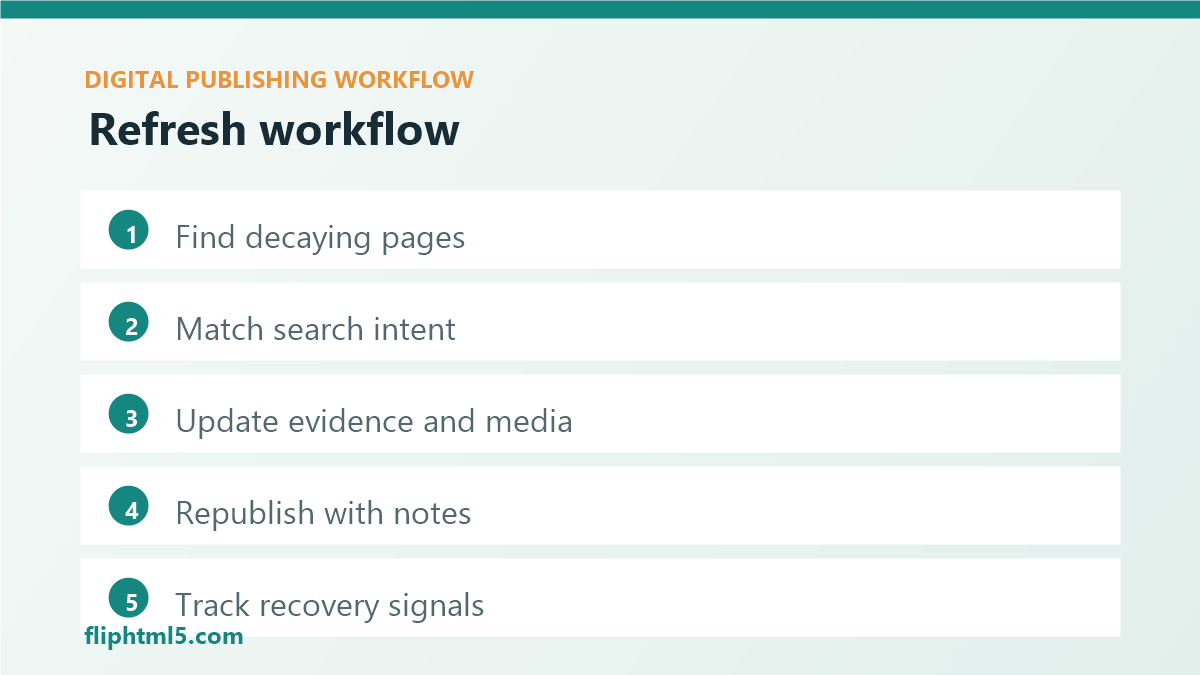
תהליך רענון בן 5 שלבים שתוכלו להריץ בכל שבוע
הפעל את תהליך העבודה הזה בקבוצות (5-0 כתובות URL בשבוע) כך שיתאים לקצב של חדר החדשות.
שלב 1: בחירת מועמדים באמצעות כלל פשוט
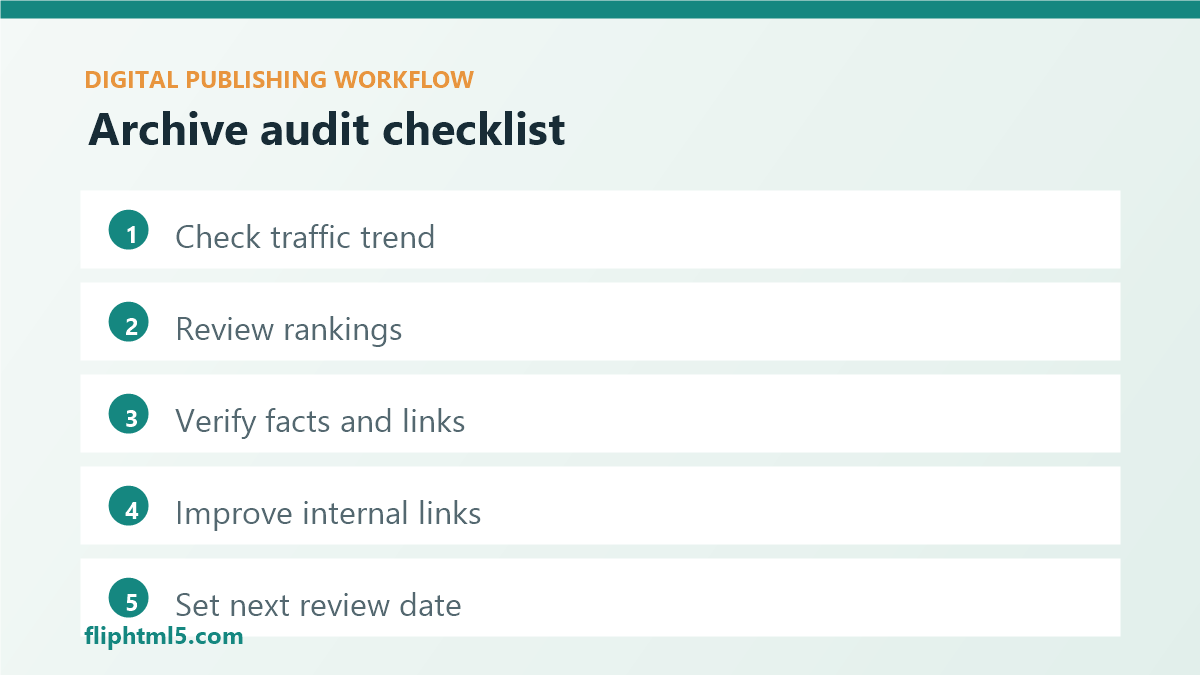
התחל עם דפים שיש להם גם ערך וגם m לשחזור. לדוגמה:
- בעלי ביצועים גבוהים בעבר שירדו ב-60-80 הימים האחרונים.
- דירוג דפים בדירוג 5?0 עבור שאילתות בעלות כוונה גבוהה (קרוב לניצחונות בעמוד הראשון).
- מדריכים של Evergreen עם חשיפות עקביות אך שיעור קליקים נמוך.
טיפ תפעולי: צור גיליון אלקטרוני עם כתובת URL, שאילתה ראשית, מיקום נוכחי, חשיפות, קליקים ותאריך עדכון אחרון. תצוגה יחידה זו הופכת את התכנון לקל.
שלב 2: אשרו מחדש את הכוונה לפני העריכה
פתחו את התוצאות המובילות הנוכחיות וענו על שלוש שאלות:
- מהי הכוונה הדומיננטית (הוראות, השוואה, הגדרה, רשימת כלים, תבנית, תמחור, חדשות)?
- אילו מדורים מופיעים שוב ושוב אצל הזוכים (רמז לסיקור הנדרש)?
- איזה פורמט מתאים לשאילתה (תשובה קצרה, שלבים, טבלה, רשימת בדיקה, דוגמאות)?
אם הדף שלך הוא בפורמט ng? עבור השאילתה, שום כמות של עריכות קטנות לא תתקן אותו לחלוטין באמצעות רענון מבני.
שלב 3: שיפור יכולת הסריקה ומהירות החיפוש?/h3>
רענון נועד לרוב להפוך את הדף לקל יותר לצריכה:
- הוסף קטע קצר שורה תחתונה קטע קרוב לראש הדף (2? משפטים).
- כתבו מחדש את כותרות H2 כדי להיות ספציפיות (השתמשו בשאלות ותוצאות, לא בתוויות מעורפלות).
- פצל פסקאות ארוכות, הוסף רשימות נקודות וסכם חלקים מורכבים.
- ודא רעיון אחד בכל סעיף והסר נקודות כפולות.
שלב 4: עדכון עובדות, דוגמאות וקישורים פנימיים
אותות טריות חשובים למוציאים לאור מכיוון שקוראים מצפים לדיוק. התמקדו ב:
- צילומי מסך מיושנים, שמות מוצרים שבורים, תכונות שהוצאו משימוש או מחירים ישנים.
- דוגמאות שכבר אינן תואמות לקהל היעד או לשוק שלך.
- קישורים פנימיים: הוסיפו 3? קישורים למדריכים ואתרים רלוונטיים של רשתות חברתיות, ועדכנו פוסטים ישנים יותר כדי לקשר חזרה.
- קריאות לפעולה: התאמו לניוזלטר, המנוי או אסטרטגיית מגנט הלידים הנוכחית שלכם.
כלל אצבע לקישור פנימי: כל דף רענן צריך להפנות לפחות לדף רכז אחד ולקבל לפחות קישור חדש אחד מדף קשור.
שלב 5: משלוח עם מעקות בטיחות
רענון לא אמור ליצור בעיות חדשות. לפני הפרסום, ודא:
- כתובת האתר נשארת זהה (יש להימנע משינויים מיותרים שמאבדים את ההיסטוריה).
- הכותרת ותיאור המטא תואמים להבטחה המעודכנת (ולאילוצי האורך).
- לתמונות יש טקסט חלופי וכיתובים במידת הצורך.
- כל מקטע שהוסר אינו שובר עוגנים או הפניות פנימיות.
כיצד למדוד האם רענון עבד
מדוד תוצאות במשך שבועיים וחצי בהתאם לתדירות הזחילה שלך. מעקב:
- דירוג שאילתה ראשית ומספר מילות המפתח r-miss? שנלכדו.
- שינוי CTR (יעילות כותרת/מטא).
- מעורבות: זמן שהייה בדף, עומק גלילה וקליקים לדף הבא.
- קליקים על קישורים פנימיים המובילים לדפי המרכז או לדפי ההמרה שלך.
שורה תחתונה
עבור צוותי הוצאה לאור דיגיטלית, ניצחונות ה-SEO המהירים ביותר מגיעים לרוב מהארכיון שלכם, ולא מהבקלוג. בנו הרגל של רענון שבועי, התמקדו בכוונה + מבנה + קישורים פנימיים, וביצועי התוכן שלכם יסייעו לכם להימנע משחיקה של חדר החדשות.