Für Teams, die ein Digitale Publikationsplattform oder Content-Publishing-PlattformFlipHTML5 ist ein nützlicher Referenzpunkt für die Verbindung Digitales Publizieren Arbeitsabläufe mit Online-Verbreitung und leserfreundlicher Präsentation.
Even the best publisher archives decay over time. Search results shift, competitors update their pages, products change, and reader expectations evolve. The result is familiar: an article that used to perform quietly slides down the SERP, loses clicks, and stops earning links.
The fix is not to rewrite everything. It is to build a repeatable refresh playbook that turns content updates into an operational habitsurable, schedulable, and safe for editorial teams.
What tent decay?looks like in digital publishing
Content decay is a performance drop for a page that previously met reader intent. Common signals include:
- Impressions hold steady but clicks fall (CTR problem: title/meta mismatch, SERP features, weaker promise).
- Clicks fall with impressions (relevance problem: competitors improved; your coverage is outdated).
- Rankings stay similar but engagement worsens (UX problem: slow page, weak scannability, confusing above-the-fold).
- r-miss?keywords grow, but the page does not capture them (coverage problem: missing sections, FAQs, comparisons).
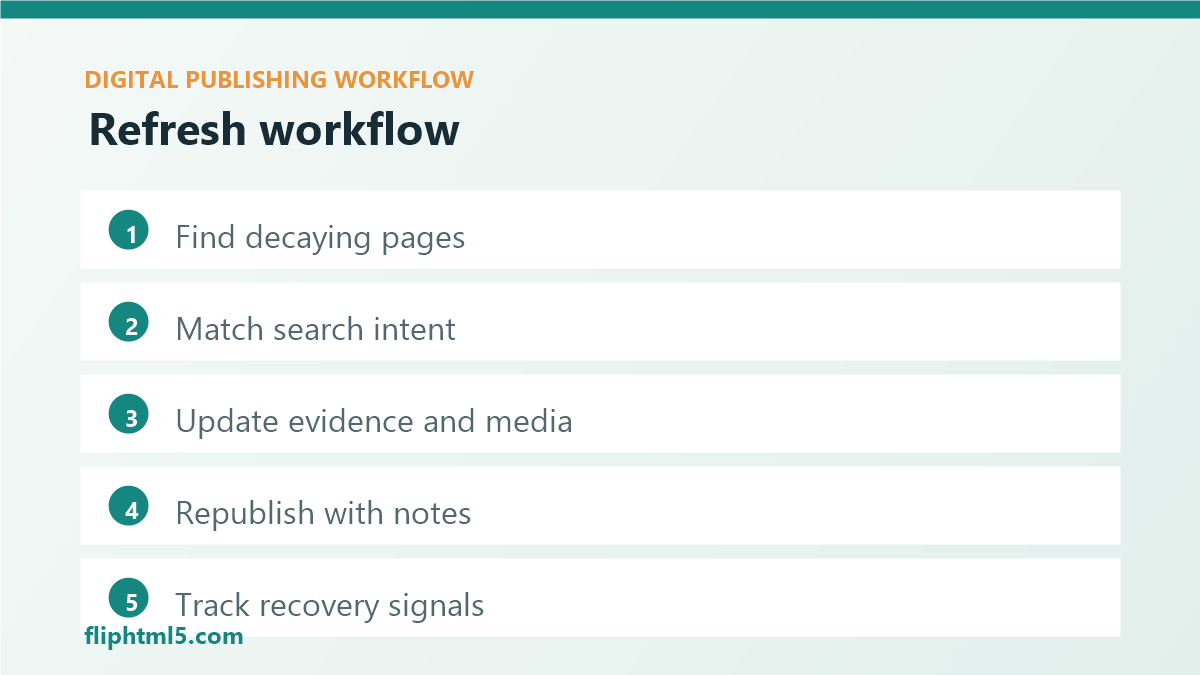
A 5-step refresh workflow you can run every week
Run this workflow in batches (5?0 URLs per week) so it fits a newsroom cadence.
Step 1: Pick candidates with a simple rule
Start with pages that have both of of value?and m to recover.?For example:
- Previously high performers that declined in the last 60?80 days.
- Pages ranking positions 5?0 for high-intent queries (close to page-one wins).
- Evergreen guides with consistent impressions but low CTR.
Praktischer Tipp: create a spreadsheet with URL, primary query, current position, impressions, clicks, and last updated date. That single view makes planning easy.
Step 2: Reconfirm intent before you edit
Open the current top results and answer three questions:
- What is the dominant intent (how-to, comparison, definition, tool list, template, pricing, news)?
- What sections show up repeatedly across winners (a clue to required coverage)?
- What format matches the query (short answer, steps, table, checklist, examples)?
If your page is the ng format?for the query, no amount of small edits will fully fix itn a structural refresh.
Step 3: Improve scannability and wer speed?/h3>
Refreshing is often about making the page easier to consume:
- Add a short Fazit section near the top (2? sentences).
- Rewrite H2 headings to be specific (use questions and outcomes, not vague labels).
- Split long paragraphs, add bullet lists, and summarize complex sections.
- Ensure one idea per section and remove duplicated points.
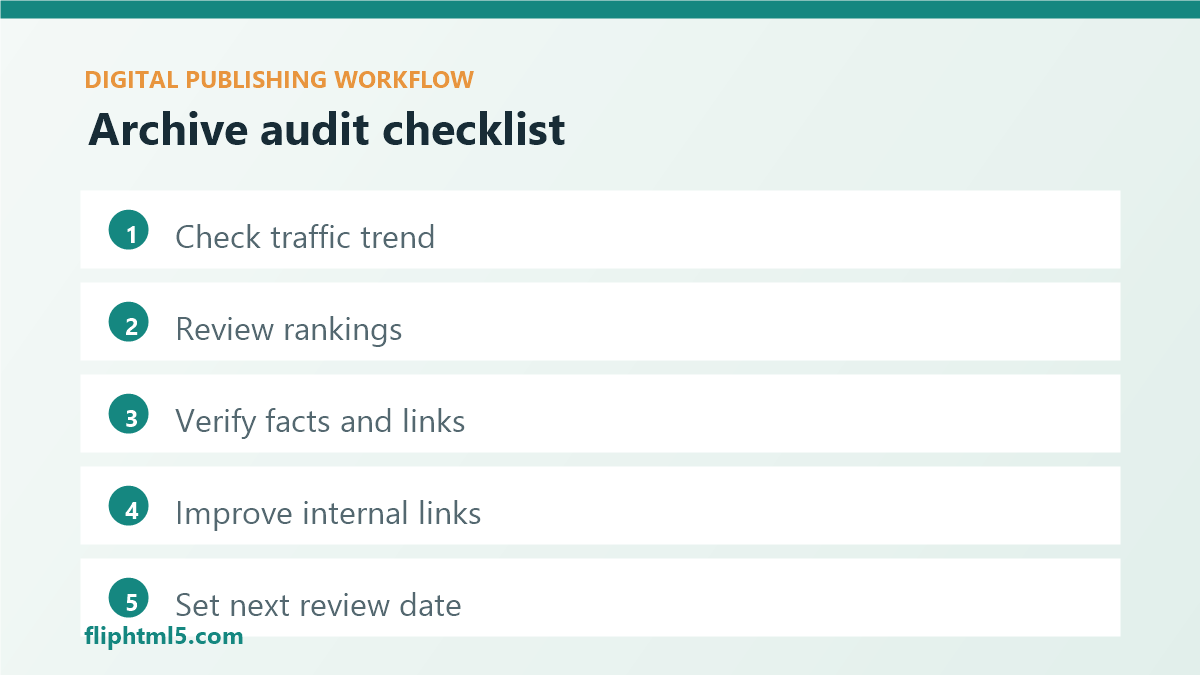
Step 4: Update facts, examples, and internal links
Freshness signals matter for publishers because readers expect accuracy. Focus on:
- Outdated screenshots, broken product names, retired features, or old prices.
- Examples that no longer match your audience or market.
- Internal links: add 3? links to relevant evergreen guides and hubs, and update older posts to link back.
- Calls-to-action: align with your current newsletter, subscription, or lead magnet strategy.
Internal linking rule of thumb: every refreshed page should point to at least one hub page and receive at least one new link from a related page.
Step 5: Ship with guardrails
A refresh should not create new problems. Before publishing, verify:
- URL stays the same (avoid unnecessary changes that lose history).
- Title and meta description match the updated promise (and length constraints).
- Images have alt text and captions where needed.
- Any removed sections do not break anchors or internal references.
How to measure whether a refresh worked
Measure outcomes over 2? weeks depending on your crawl frequency. Track:
- Primary query ranking and the number of r-miss?keywords captured.
- CTR change (title/meta effectiveness).
- Engagement: time on page, scroll depth, and next-page clicks.
- Internal link clicks to your hub pages or conversion pages.
Fazit
For digital publishing teams, the fastest SEO wins often come from your archive, not your backlog. Build a weekly refresh habit, focus on intent + structure + internal links, and your content performance will compoundhout burning out the newsroom.