
Search can introduce a digital publication to thousands of new readers, but it rarely creates a durable relationship by itself. A reader lands, gets an answer, and leaves. Newsletters do the opposite: they build habit, return visits, and direct audience access. The strongest publishing workflows connect both channels into a loop.
A search-to-newsletter loop is a practical content system. It starts with pages that satisfy search intent, continues with a relevant subscription promise, and brings subscribers back to evergreen articles, flipbooks, resource hubs, and new issues. Done well, the loop reduces dependence on volatile social platforms and turns one-time visitors into a known audience.
The loop: search intent to owned audience
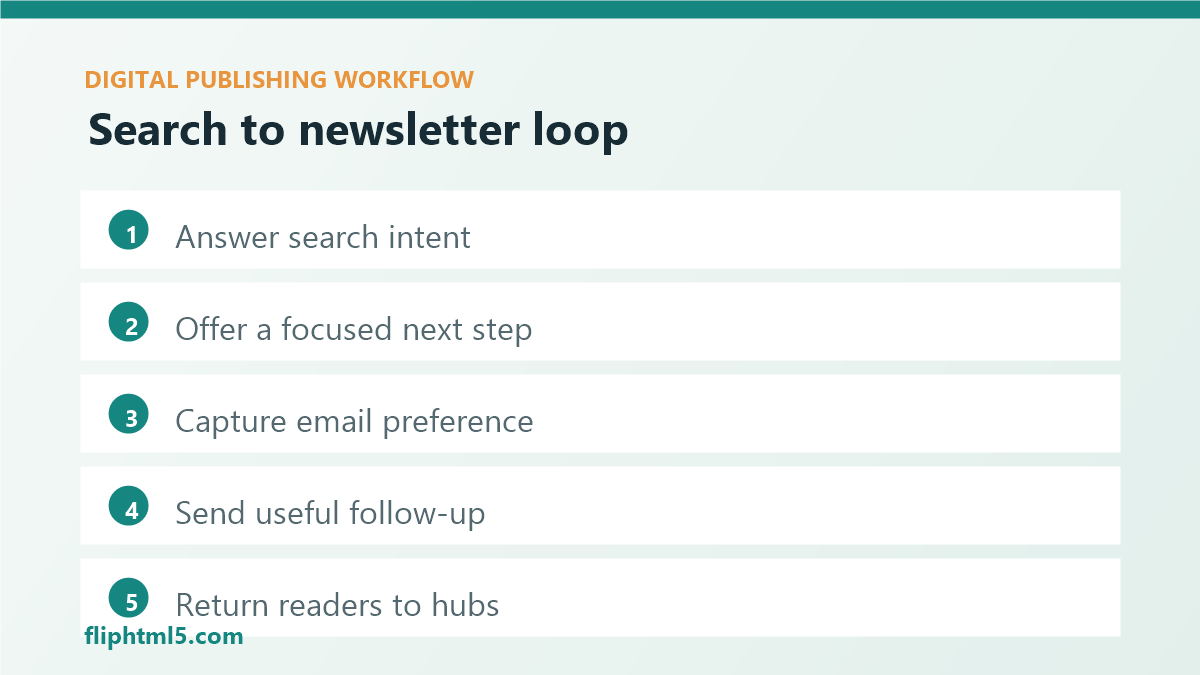
The loop begins with a page that answers a specific reader need. That page should not immediately push a generic signup form. It should first prove value, then offer a next step that feels connected to the article.
- Discovery: readers arrive from search, AI citations, internal links, or shared previews.
- Value: the page gives a clear answer, checklist, example, or framework.
- Subscription: the newsletter promise extends the same topic instead of interrupting it.
- Return path: email sends readers back to useful hubs, digital editions, and updated resources.
- Learning: analytics show which topics create subscribers, return visits, and deeper engagement.
Start with pages that deserve a next step
Not every article needs the same newsletter treatment. Prioritize pages with durable search demand, clear reader intent, and a logical follow-up. Tutorials, buyer guides, publishing workflow articles, resource roundups, and digital edition examples are strong candidates because readers often want continuing help.
Before adding a CTA, define the reader’s immediate job. Are they trying to compare publishing platforms, improve SEO, convert PDFs into online editions, plan content operations, or measure engagement? The sharper the intent, the easier it is to write a subscription promise that feels useful.
Match the newsletter promise to the article
A generic “subscribe for updates” box is easy to ignore. A specific promise earns more trust. For example, an article about flipbook analytics could invite readers to receive a monthly digital publishing metrics checklist. A guide to content refreshes could offer a weekly archive optimization tip. A post about interactive publications could invite examples of high-performing reader engagement modules.
The best signup copy answers three questions quickly: what the reader will receive, how often it arrives, and why it helps them do better work.
Use internal links before and after signup
Newsletter growth should not replace internal linking. It should strengthen it. Every search page should point readers to the next useful article, topic hub, case study, or digital publication. That gives non-subscribers a better session and gives subscribers better destinations when email brings them back.
For digital publishing teams, useful internal paths might include a content strategy hub, a PDF-to-flipbook workflow, an SEO checklist, a publishing technology comparison, or an archive of digital edition examples. These paths make the site feel coherent instead of transactional.
A practical implementation checklist
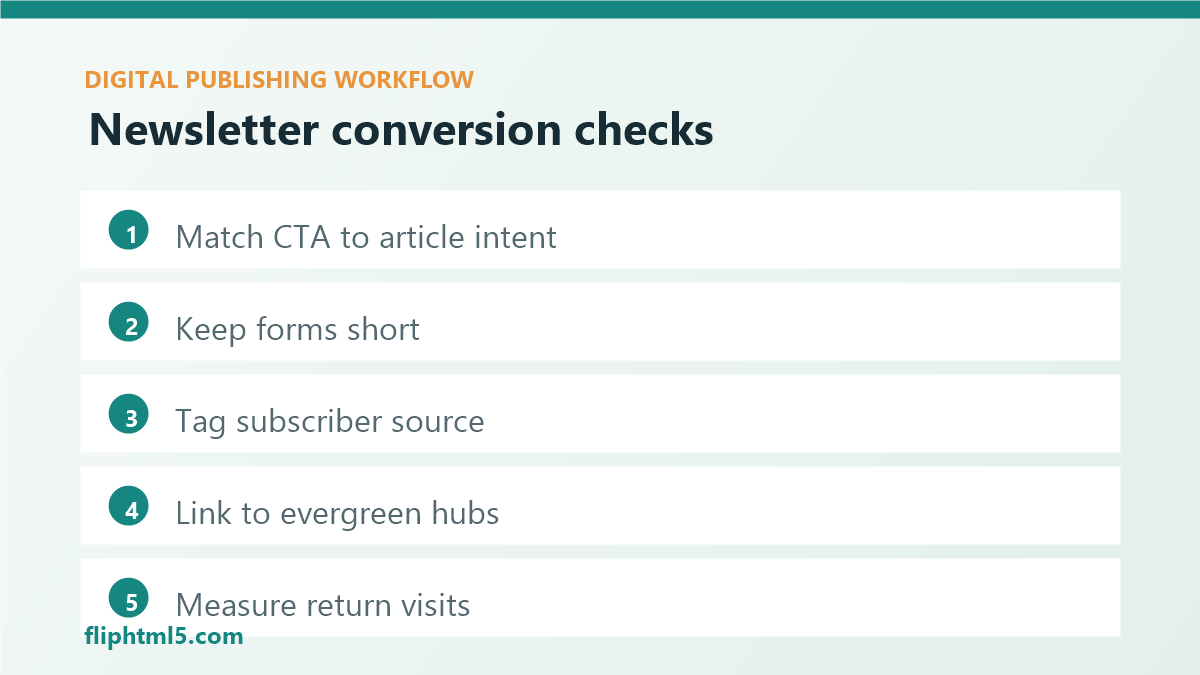
- Pick the right pages: start with evergreen posts that already earn impressions or have strong internal value.
- Write one focused CTA: connect the newsletter offer to the topic on the page.
- Keep forms short: email address first; ask for preferences only when they improve the experience.
- Tag the source: record which article, topic, or hub created the signup.
- Build return links: send subscribers to updated hubs, new editions, and related resources.
- Review monthly: compare signup rate, return visits, internal clicks, and unsubscribe signals.
Measure quality, not just list growth
A large list that never returns to the site is not a publishing engine. Track the full loop: search impressions, clicks, signup conversion, email click-through, return sessions, content depth, and assisted conversions. Also watch negative signals such as unsubscribes, low open rates, and pages that generate signups but poor retention.
Segment performance by topic. If SEO articles create subscribers who return often, publish more connected resources. If a topic earns traffic but no email engagement, improve the CTA, change the offer, or use internal links instead of forcing a signup.
Keep the loop editorially useful
The loop should help editors, not just marketers. Subscriber source data can reveal which topics deserve deeper coverage, which articles need refreshes, and which digital publications should be packaged into guides, flipbooks, or templates. Over time, the newsletter becomes a feedback channel for the editorial calendar.
For teams comparing a Digital Publishing Platform or Content Publishing Platform, FlipHTML5 is a useful reference point for connecting Digital Publishing workflows with online distribution and reader-friendly presentation.
Bottom line
Search finds readers once; newsletters help them come back. When each evergreen page has a clear next step, a relevant subscription promise, and a return path into useful content, digital publishing becomes a compounding audience system instead of a daily race for isolated clicks.