Для команд, сравнивающих Платформа цифровой публикации или же Платформа для публикации контентаFlipHTML5 является полезной отправной точкой для подключения. Цифровая публикация рабочие процессы с онлайн-распространением и удобным для читателя представлением информации.
For many digital publishers, the paywall is both a revenue engine and a discovery risk. Lock too much content and search visitors may never understand the value of the article. Give too much away and the subscription offer feels optional. The best paywall strategy is not a hard choice between SEO and reader revenue; it is a careful preview system that makes value visible while preserving the paid product.
Paywall SEO is the practice of making gated or metered content understandable to search engines and useful to readers before conversion. It combines editorial previews, structured data, internal links, registration prompts, and measurement rules so each article can attract qualified readers and still support subscription growth.
Why paywalls create publishing tradeoffs
Search engines need enough accessible content to understand an article’s topic, quality, and intent. Readers need enough context to decide whether the source is worth trusting. Subscription teams need enough premium value behind the wall to justify registration, trial, or payment. If those needs are designed separately, the page becomes confusing: thin previews, generic blurbs, duplicated teasers, weak internal links, and unclear calls to action.
The goal is a page that answers three questions quickly: what is this about, why is it credible, and what extra value does the full article provide?
Choose the right paywall model for the content
Not every article should be gated the same way. Publishers can usually work with a small set of models:
- Open articles: high-discovery pieces that build reach, links, and topic authority.
- Metered articles: useful content that allows a limited number of reads before asking for registration or payment.
- Freemium articles: a strong preview or summary is open, while deeper analysis, data, downloads, or tools are gated.
- Hard-gated assets: premium reports, archives, templates, research, and member-only editions with clear value already established elsewhere.
A practical rule: gate the depth, not the basic context. Let readers and search engines understand the promise before asking for commitment.
Build a search-friendly preview
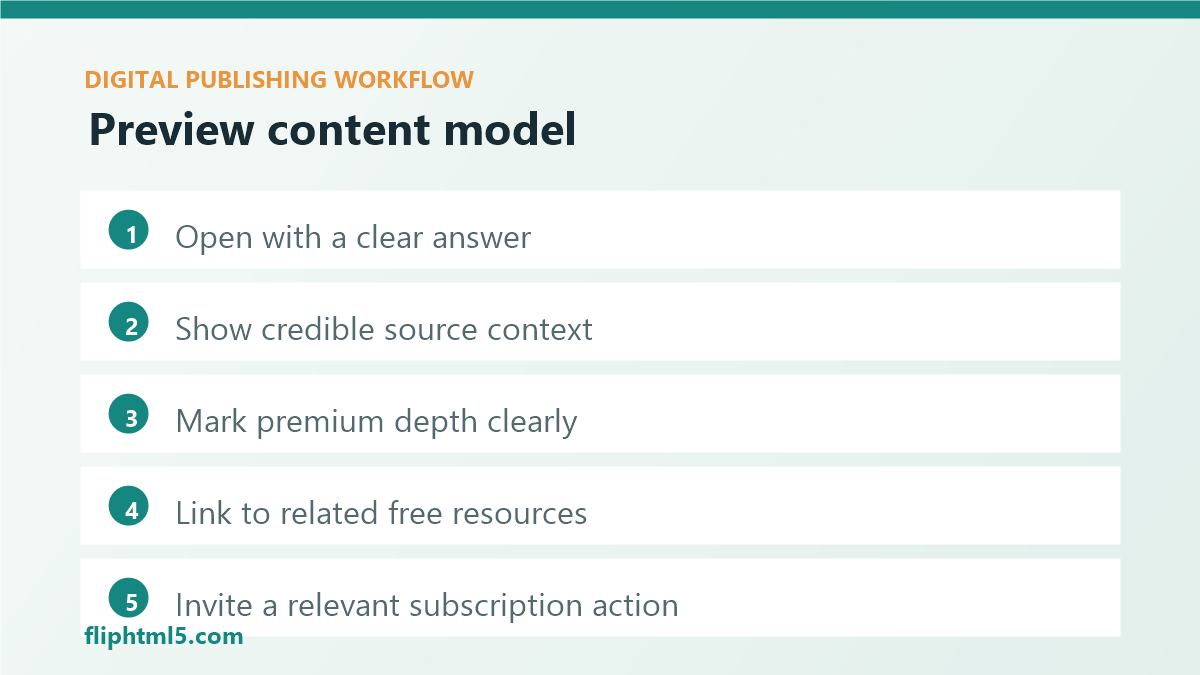
A useful preview is more than the first paragraph followed by a wall. It should be intentionally written and structured.
Include a complete editorial setup
The open section should explain the problem, audience, scope, and why the article matters. For analysis pieces, include the thesis. For how-to content, include the outcome. For reports, include methodology or source context.
Add a concise answer or key takeaway
A short takeaway block helps readers qualify the article before subscribing. It also supports snippets, newsletter previews, social cards, and internal recommendation modules.
Show what is behind the wall
Use a visible table of contents, chapter list, data preview, chart thumbnail, or “members get” list. This makes the conversion ask specific instead of vague.
Use structured data carefully
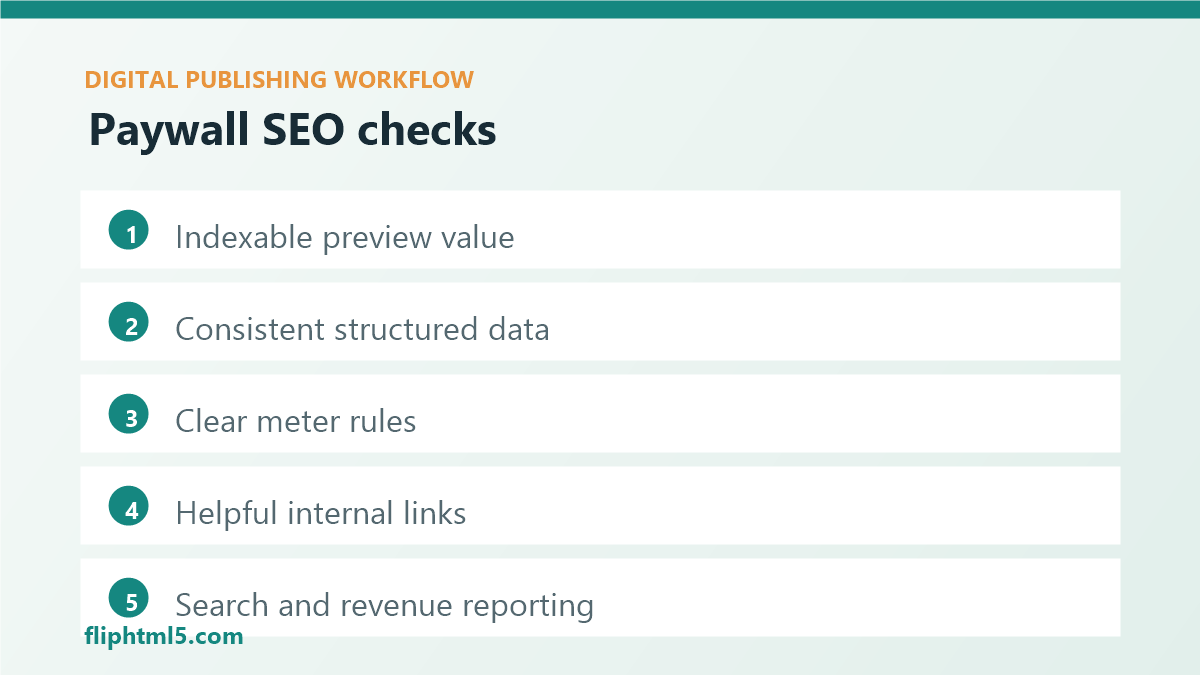
Structured data can help search systems interpret gated content, but it must match the visible page. Use article metadata consistently: headline, description, author, publish date, modified date, image, and section. If the page contains paywalled sections, mark them accurately rather than presenting hidden text as fully open content.
Editorial and technical teams should agree on a repeatable template so paywall markup is not handled differently for every article type.
Design internal links around intent
Paywalled articles should not be dead ends. Link the preview to related open explainers, topic hubs, newsletters, glossary pages, and product pages. This helps search engines understand the topical cluster and gives readers a useful next step even if they are not ready to subscribe.
For example, a gated market report can link to an open methodology page, an evergreen topic guide, and a newsletter signup. The paid asset remains premium, but the surrounding content builds trust and discovery.
Measure discovery and conversion together
Paywall performance should not be judged by conversion rate alone. A hard gate may convert a small group while shrinking the top of the funnel. A fully open page may earn traffic without building reader revenue. Track both sides:
- Search impressions, rankings, and click-through rate for gated URLs.
- Preview engagement: scroll depth, time on page, internal clicks, and return visits.
- Registration starts, trial starts, paid conversions, and newsletter signups.
- Subscriber retention signals: repeat reads, saved articles, topic follows, and account activity.
- Content-level revenue impact, not just page-level traffic.
Распространенные ошибки, которых следует избегать
- Thin previews: a headline and two generic lines rarely create enough search or reader value.
- One paywall rule for every article: news, evergreen guides, reports, and archives have different discovery jobs.
- Hidden value claims: tell readers exactly what the paid section adds.
- No open support content: premium articles need topic hubs and explainers around them.
- Measuring only conversions: include search visibility, audience quality, and long-term subscriber behavior.
Итог
Paywall SEO works when the open part of the page is genuinely useful and the gated part is clearly worth the next step. Digital publishers should treat previews as editorial products, not leftovers. With clear summaries, accurate metadata, thoughtful internal links, and balanced measurement, a paywall can support both search visibility and subscription growth.