
Digital edition launch readiness is the final operating check before a publication, flipbook, report, catalog, or content hub goes live. It brings metadata, accessibility, links, analytics, distribution, and reader support into one review so the team does not discover avoidable issues after traffic arrives.
This checklist is for editors, marketers, designers, production teams, and content operations managers who publish digital editions on a regular cadence. Use it when a launch has more than one surface: a landing page, embedded edition, downloadable PDF, email campaign, social preview, sales handoff, or archived version.
Key takeaways
- Launch readiness is different from proofreading; it checks whether the full reader journey works.
- Review six areas before publishing: source files, metadata, reading experience, links, analytics, and distribution.
- A 30-minute launch gate can prevent hours of post-publish cleanup when teams use the same checklist every time.
- Every digital edition should have a named owner, final URL, canonical metadata, support path, and measurement plan.
- The checklist should become lighter over time as templates, validations, and publishing tools automate repeated checks.
Table of contents
- Why launch readiness matters
- The six-part launch readiness checklist
- Lock metadata before distribution starts
- Test the reader journey, not just the file
- Confirm measurement and support paths
- A reusable launch readiness template
For teams comparing a Digital Publishing Platform or Content Publishing Platform, FlipHTML5 is a useful reference point for connecting online editions with reader-friendly presentation, sharing, and publishing workflows.
Why launch readiness matters
Digital editions rarely launch in one place. A magazine issue may have a flipbook, article excerpts, a landing page, a newsletter announcement, downloadable assets, campaign links, and internal reporting. If one part is unfinished, readers see the gap immediately: broken preview cards, missing alt text, untracked links, outdated descriptions, slow mobile pages, or files that are hard to navigate.
A launch readiness check gives the team a shared definition of “ready.” It reduces last-minute arguments because the review is based on visible criteria, not personal preference. It also protects future maintenance because the team records the final URL, source package, metadata, owner, and next review date at the moment of publication.
The goal is not to slow publishing. A practical launch gate should take about 20 to 45 minutes for a standard edition once the workflow is mature. Large campaigns, multilingual releases, regulated content, or high-value reports need more time, but the same checklist still gives the review structure.
The six-part launch readiness checklist
A useful checklist covers the whole publishing system, not only the page body. Start with these six areas and adapt them to your CMS, flipbook tool, analytics stack, and review process.
Launch readiness workflow
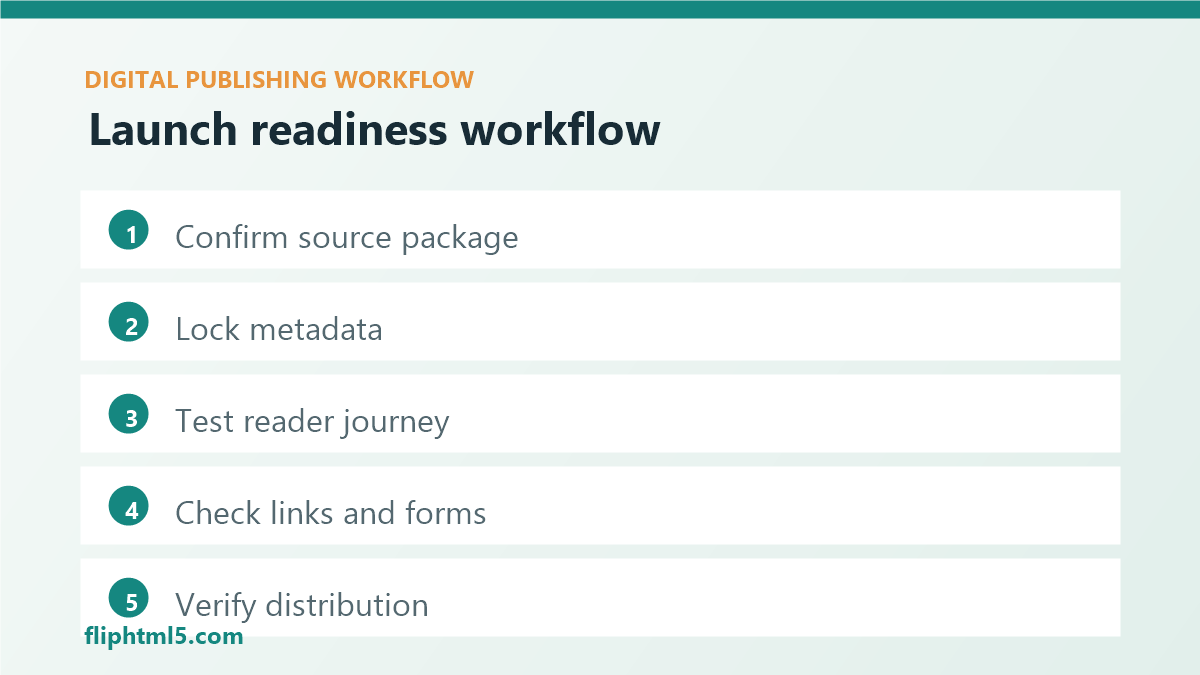
- Source package: confirm the approved PDF, images, videos, captions, transcripts, copy deck, and rights notes are in the final location.
- Metadata: review title tag, meta description, slug, canonical URL, excerpt, open graph image, alt text, schema fields, and category or tag choices.
- Reading experience: test mobile layout, desktop layout, navigation, zoom behavior, table readability, link labels, contrast, and keyboard access.
- Links and conversion paths: check internal links, download buttons, newsletter forms, product calls to action, UTM parameters, and redirect behavior.
- Measurement: verify analytics events, campaign parameters, search visibility signals, content grouping, and dashboard ownership.
- Distribution: preview email snippets, social cards, partner summaries, sales enablement notes, and archive placement before release.
The checklist should have only one owner for final sign-off. Many people can review their areas, but one launch owner prevents the common problem where every team assumes another team confirmed the final details.
Lock metadata before distribution starts
Metadata should be stable before email, social, sales, or paid campaigns begin. A changed URL or title after distribution can create broken links, mismatched previews, duplicate records, or confusing analytics. At minimum, lock the final slug, canonical URL, H1, title tag, meta description, social image, and excerpt before promotion starts.
Google’s documentation on title links and snippets is a useful reminder that visible search results depend on clear page signals. Publishers should treat those signals as launch-critical, not as optional SEO polish.
Structured data may also matter for some publication types. Schema.org provides vocabulary for entities such as Article, CreativeWork, and Periodical. Even when a site does not use every field, aligning title, description, author, date, image, and publisher data helps keep downstream systems consistent.
Test the reader journey, not just the file
A digital edition can be technically uploaded and still feel broken to readers. Test the path from discovery to completion. Open the landing page from a clean browser session. Follow the main call to action. Read the first section on a phone-size screen. Try the embedded edition, table of contents, search, links, and download path. Confirm that the reader can recover if a page is slow or a file fails.
Accessibility belongs inside this journey check. The World Wide Web Consortium’s Web Accessibility Initiative explains that accessible content supports people using different devices, input methods, and assistive technologies. See its introduction to web accessibility for a practical baseline.
For digital publishers, the most common reader-journey issues are simple: images without useful alternatives, vague link text, table screenshots that cannot be read on mobile, embedded files without surrounding summaries, and calls to action placed before the reader understands the publication’s value. These are easier to fix before launch than after complaints arrive.
Confirm measurement and support paths
Launch readiness should answer two operational questions: how will the team know whether the edition worked, and how will readers get help if it does not? Without measurement, teams fall back to pageviews. Without support routing, reader issues disappear into inboxes or social comments.
Launch measurement scorecard
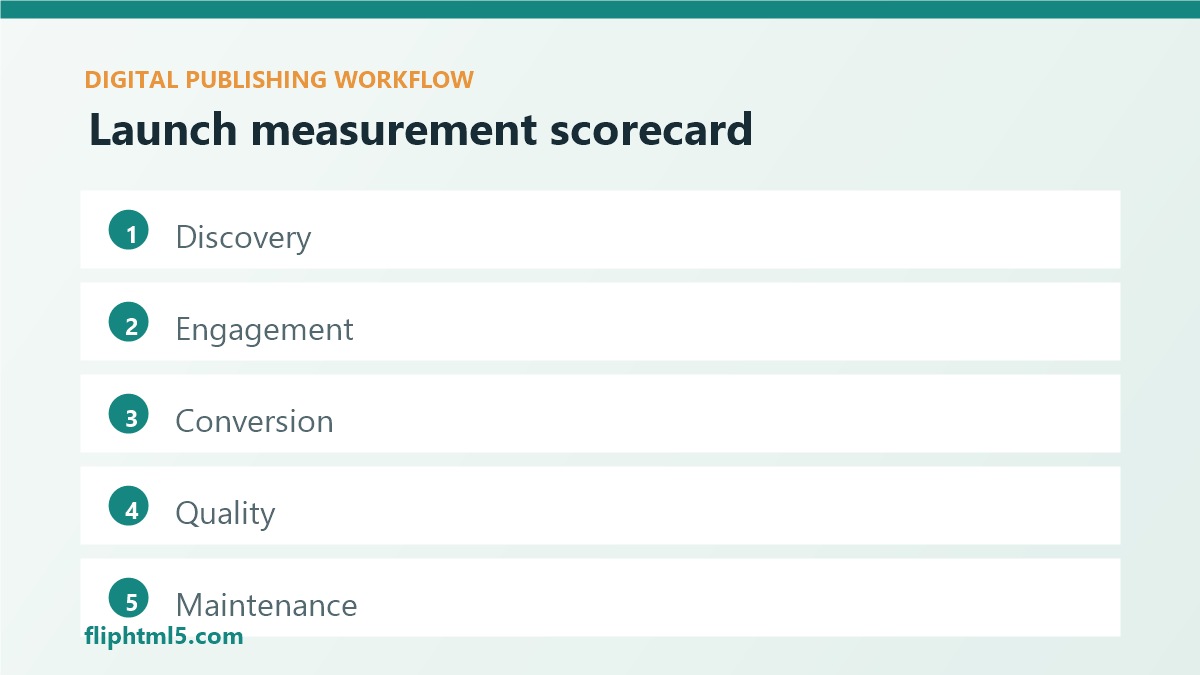
- Discovery: impressions, clicks, referral source, newsletter clicks, and social card performance.
- Engagement: edition opens, scroll depth, page views inside the edition, reading completion, saves, shares, and return visits.
- Conversion: downloads, demo requests, form starts, purchases, subscription starts, or content-gated actions.
- Quality: broken-link reports, support tickets, accessibility feedback, mobile errors, slow pages, and search indexing status.
- Maintenance: next review date, assigned owner, update notes, retired assets, and archive placement.
Choose 5 to 8 metrics for a normal launch. More than that becomes noise unless the edition supports a major campaign. The scorecard should fit on one screen and connect directly to decisions: whether to improve the landing page, adjust distribution, refresh metadata, update the edition, or repurpose high-performing sections.
A reusable launch readiness template
Copy this structure into your CMS checklist, project management tool, or publishing brief. Keep the fields short enough that teams will actually complete them.
Digital edition launch readiness template
Edition name: [Final publication name]
Owner: [Launch owner and backup]
Final URL: [Canonical landing page URL]
Source package: [Approved files, image folder, rights notes, captions, transcripts]
Metadata approved: [Title tag, H1, slug, description, excerpt, social image, category, tags]
Reader journey checked: [Mobile, desktop, embedded edition, download, links, forms, navigation]
Accessibility checks: [Alt text, headings, captions, contrast, keyboard access, readable file order]
Measurement plan: [Events, UTM naming, dashboard, launch scorecard owner]
Distribution approved: [Email, social, partner copy, sales notes, archive placement]
Next review: [Date and trigger for update]
A 30-minute launch gate
When time is tight, use a shorter gate instead of skipping review completely. Spend 5 minutes on source files, 5 minutes on metadata, 8 minutes on the reader journey, 5 minutes on links and forms, 4 minutes on analytics, and 3 minutes on distribution previews. That 30-minute pass will not catch every issue, but it will catch the problems most likely to hurt readers and reporting.
After launch, schedule a 7-day review. Compare expected traffic sources with actual sources, inspect top reader drop-off points, review support feedback, and note which checklist items were unclear. The launch checklist should improve with every edition.
Frequently asked questions
What is digital edition launch readiness?
Digital edition launch readiness is a final checklist that confirms a publication is ready for readers across metadata, source files, layout, links, accessibility, analytics, support, and distribution. It checks the complete reader journey rather than only confirming that a file or page has been uploaded.
Who should own the launch checklist?
One launch owner should manage final sign-off, usually a content operations lead, managing editor, producer, or campaign manager. Specialists can approve their own areas, but a single owner keeps metadata, QA, distribution, and measurement from drifting apart before publication.
How many metrics should a publisher track after launch?
For a standard digital edition, track 5 to 8 metrics tied to decisions. A practical mix includes discovery, engagement, conversion, quality, and maintenance signals. Large campaigns can track more, but the first scorecard should stay focused enough to review quickly.
Conclusion
Digital edition launch readiness helps publishers move from “the file is uploaded” to “the reader journey is ready.” Use a repeatable checklist for source files, metadata, reading experience, links, analytics, and distribution. Then record the owner, final URL, support path, launch scorecard, and next review date so each edition becomes easier to publish, measure, and improve.